AMD Mocks NVIDIA Ahead of RTX 4080 Launch With Official Specs Comparisons
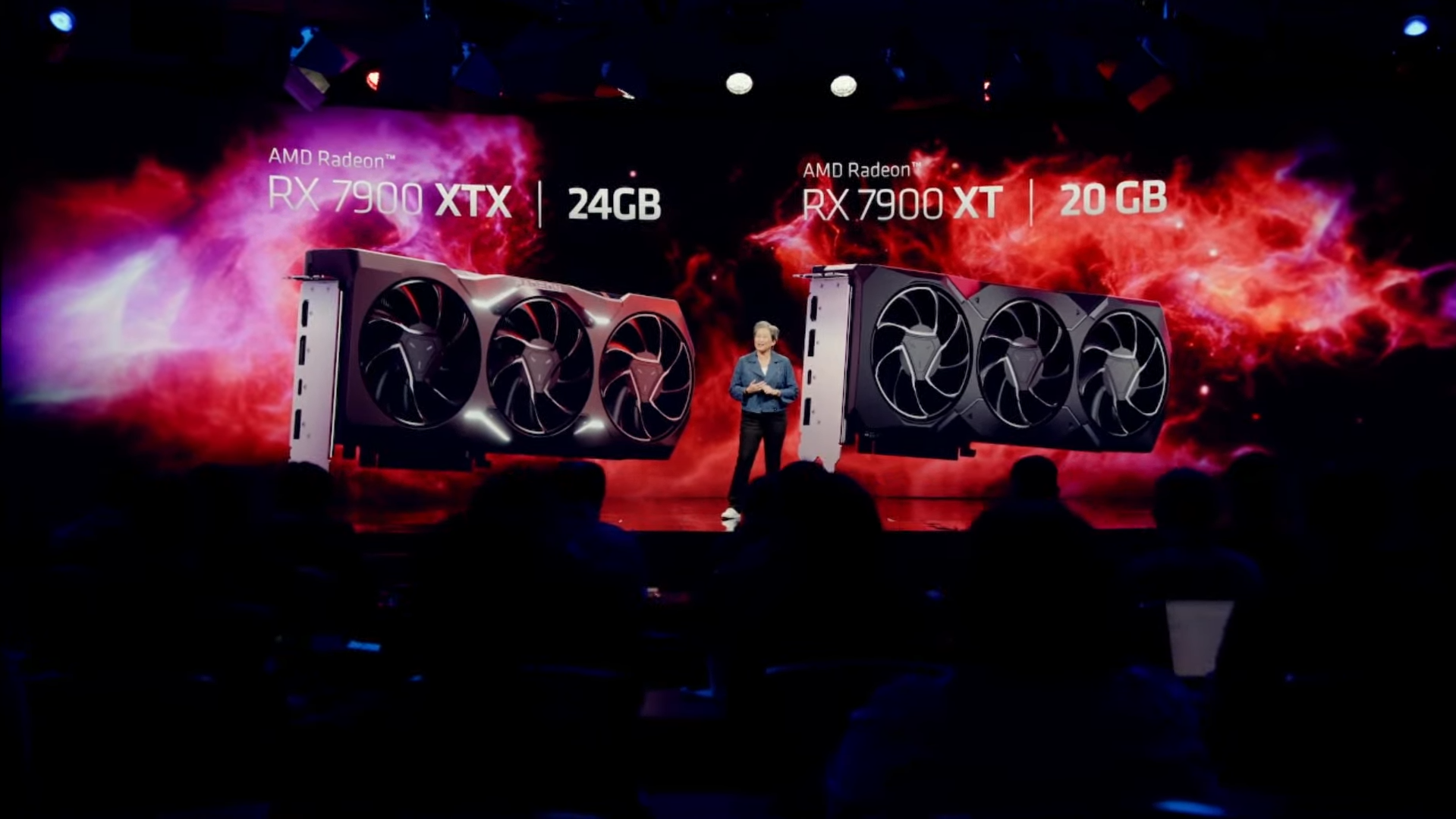
AMD decided to grab some limelight from NVIDIA only two days before the debut of the RTX 4080 graphics card by providing further information about their new RX 7900 series. AMD has released several slides contrasting its Radeon RX 7900 flagship graphics card with NVIDIA’s upcoming RTX 4080 16GB GPU in a move that is sure to draw attention.
The Radeon RX 7900 XT and XTX are compared to the forthcoming RTX 4080 on the first presentation from AMD. It compares RDNA3 computing units to NVIDIA SMs based on the slides, which is fascinating. AMD also claims that 1 of their shader units equals 2 CUDA cores since RDNA3 has 64 shading units per computing unit and Ada Lovelace (RTX 4080) has 128 CUDA cores per SM.
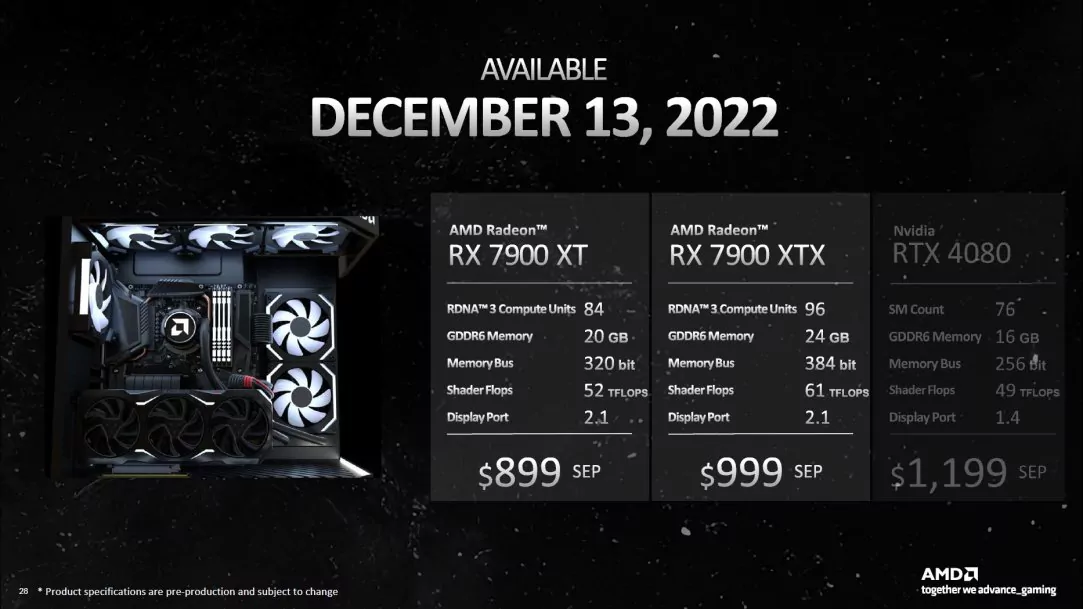
Next, a correlation of GDDR6 memory is made, with AMD easily winning with 20 and 24 GB of GDDR6 memory compared to the RTX 4080’s 16 GB. In contrast to the RTX 4080’s 256-bit memory bus width, AMD GPUs have wider memory bus widths of 320 bits and 384 bits. Additionally, we compare the basic performance metrics, where shader TFLOPs on the RTX 4080 are 49, whereas they are 52 on the RX 7900 XT and RX 7900 XTX. Following a pricing comparison of the SEPs, AMD reminds everyone that their cards enable DisplayPort 2.1 while NVIDIA only supports 1.4.
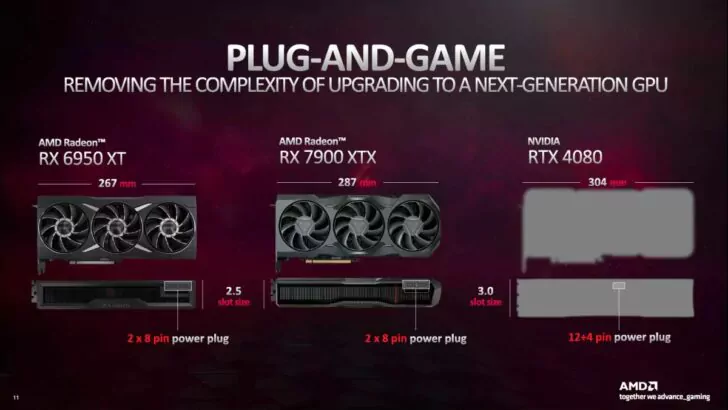
AMD doesn’t just stop here. According to AMD, the Radeon RX 6950 XT and RX 7900 XT are shorter and smaller than the RTX 4080. While AMD will continue to use the standard 2x 8-pin connections that have been the backbone of GPU power for years, the RTX 4080 needs the new and possibly troublesome 12VHPWR socket.
AMD’s RX 7900 XT and XTX will also enable a maximum video bandwidth of 54 Gbps utilizing UHBR 13.5, whereas NVIDIA will max out at 32.5 Gbps (again mocking NVIDIA). In contrast to NVIDIA’s limitation of 8K at 60 Hz and 4K at 300 Hz, AMD’s RX 7900 line of graphics cards will be able to handle 8K at 165 Hz and 4K at 480 Hz. The last few slides of AMD’s presentation also included some performance benchmarks, showing that AMD outperformed the RX 6950XT by 67% in rasterization loads and up to 82% in ray tracing loads.
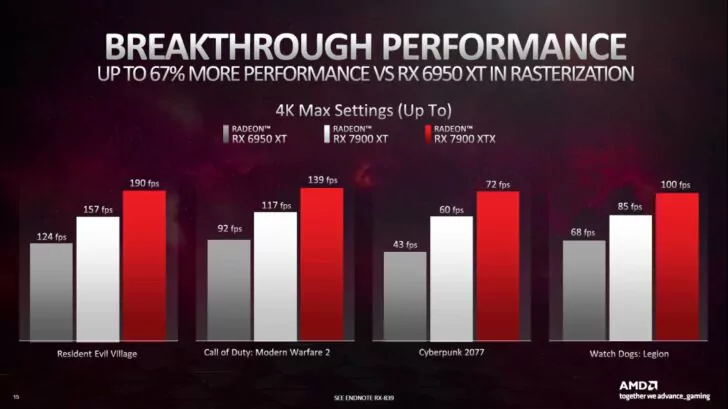
Compared to NVIDIA’s upcoming RTX 4080, AMD has undoubtedly played with fire here. It would be fascinating to observe how the crowd responds to this initiative, given that AMD has already established a tradition of mocking NVIDIA.
Source: Videocardz
| SKU | Chip | CU (128 Shading Units/ 1 CU) | CU (64 Shading Units/ 1 CU) | FP32 | Max Clock | Cache | Memory Bus | VRAM | Memroy Spec | Speed (Gbps) | TDP | ||||
| RX 7970XT3D | Navi31 | 96 | 192 | 12288 | 3.2 GHz | 192MB? | 384-bit | 24GB | GDDR6 | 20 | 450W | ||||
| RX 7950XT/RX 7900 XTX | Navi31 | 84 | 168 | 10752 | 3.1 GHz | 96MB | 384-bit | 24GB | GDDR6 | 20 | 350W | ||||
| RX 7900XT | Navi31 | 70 | 140 | 8960 | 3.0 GHz | 80MB | 320-bit | 20GB | GDDR6 | 20 | 300W | ||||
| RX 7800XT | Navi32 | 60 | 120 | 7680 | 3.4 GHz | 64MB | 256-bit | 16GB | GDDR6 | 18 | 270W | ||||
| RX 7800 | Navi32 | 56 | 112 | 7168 | 3.3 GHz | 48MB? | 256-bit | 16GB | GDDR6 | 18 | 250W | ||||
| RX 7700XT | Navi32 | 48 | 96 | 6144 | 3.2 GHz | 48MB? | 192-bit | 12GB | GDDR6 | 18 | 200W | ||||
| RX 7700 | Navi32? | 40 | 80 | 5120 | 3.1GHz | 40MB? | 160-bit? | 10GB? | GDDR6 | 18 | 175W | ||||
| RX 7600XT | Navi33 | 32 | 64 | 4096 | 3.2 GHz | 32MB | 128-bit | 8GB | GDDR6 | 18 | 150W | ||||
| RX 7600 | Navi33 | 28 | 56 | 3584 | 3.1 GHZ? | 32MB? | 128-bit | 8GB | GDDR6 | 18 | 130W | ||||