How to Fix MTP Devices not Connecting on Windows 10
After upgrading to Windows 10, particularly following the Anniversary Update, numerous users reported that the Media Transfer Protocol (MTP) ceased to function. This means they were unable to transfer data to or from a variety of USB devices, such as cameras and smartphones — a fairly basic functionality that should not be compromised. You may encounter an error message indicating that the drivers for the device are not installed, accompanied by a code 28 error.
This issue appears with Windows 10 and Microsoft is fully aware of it. There was even a Windows Update that was meant to fix it. It’s a problem with Windows, not your phone, and it is very easily solvable.
There are a few ways you can solve this issue, such as the aforementioned update package, as well as some other tips and tricks, so read on if you want to see how.
Method 1: Download and install the Media Feature Pack
This update is primarily for N or KN editions of Windows 10, which are available to people but don’t offer the Media Player as well as some related technologies to the end user. The update you’re looking for is KB3010081, and you can download it here from Microsoft’s website. When you do, simply install it using the .exe file and reboot your device in the end.
Method 2: Install wpdmtp.inf from Windows’ own directories
You might get an additional error message saying A service installation section in this INF is invalid, which points to an error with an .inf file. There is such a file that is related to MTP, and installing it manually can often solve this issue.
- Hold the Windows Key and Press R. Type %systemroot%\INF.

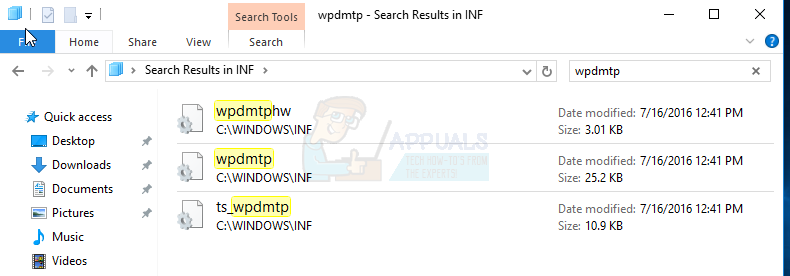
- You can find wpdmtp.inf inside that directory. Use the search bar in the top right corner to assist you.
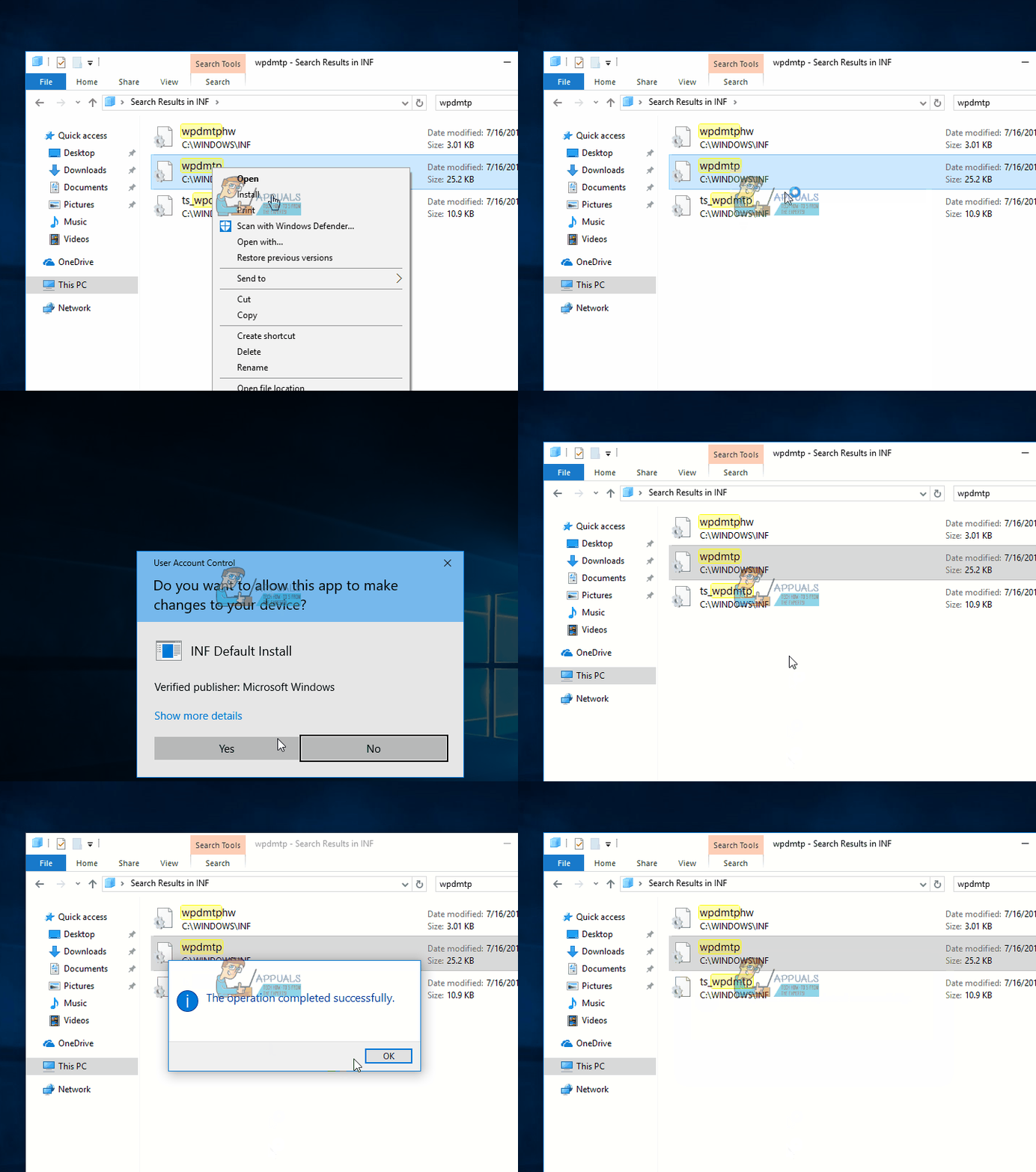
- When you find it, right-click and select ‘install‘ from the menu. The process should be quick, after which you should be able to connect your device to the PC without experiencing any issues.
Method 3: Install wpdmtp.inf from the Device Manager
You can also install the file from the Device Manager, since the device you’re trying to connect will appear under Portable Devices with a yellow exclamation mark.
- Press Windows and R on your keyboard simultaneously, and in the Run window that opens, type in devmgmt.msc. This will open the Device Manager.
- Expand Portable Devices in the list of devices connected to your computer and find your device. NOTE: For some users, it might appear under Other devices, so if you can’t find it in Portable Devices, that’s also worth checking.
- Right-click it, and choose Update Driver Software.
- Choose Browse my computer for driver software.
- Click the Browse button and navigate to %systemroot%\INF, and choose the inf file.
- Follow the instructions of the wizard and you will have the file installed in no time.
Method 4: Install the MTP USB Device driver
- Follow steps 1 through 4 from the previous method.
- Instead of Browse, click on Let me pick from a list of device drivers on my computer.
- From the options, choose MTP USB Device, and follow the wizard to install it.
Any one of the aforementioned methods should help you solve this issue. The problem is well known and easily solvable; there’s nothing stopping you from trying them and resolving your MTP issue.

thank you for your help! method 2 is working!