FIX: Restart Explorer.exe Process in Windows 10
Explorer.exe is a universal process that is used across all versions of the Windows Operating System. Explorer.exe is the Windows process for the Windows Explorer application – the application that is used to browse files and folders on a Windows Operating System. Sometimes, the Windows Explorer utility needs to be refreshed, and the most efficient way to do so is to simply restart the explorer.exe process. A restart of the explorer.exe process can be achieved through a number of different methods – and that is the case for all versions of the Windows OS, including Windows 10.
The following are the three best methods that can be used to restart the explorer.exe process and refresh Windows Explorer in Windows 10:
Method 1: Restart the explorer.exe process from the Task Manager
Launch the Task Manager by pressing Ctrl + SHIFT + ESC or Hold the Windows Key and Press X and Choose Task Manager.
Navigate to the Processes tab of the Task Manager. Right Click on any of the tabs at the top, and put a check on Process Name (so you can see the file name for the process)
Next, Click on Windows Explorer to select it.
Then, right click on Windows Explorer, and choose Restart.
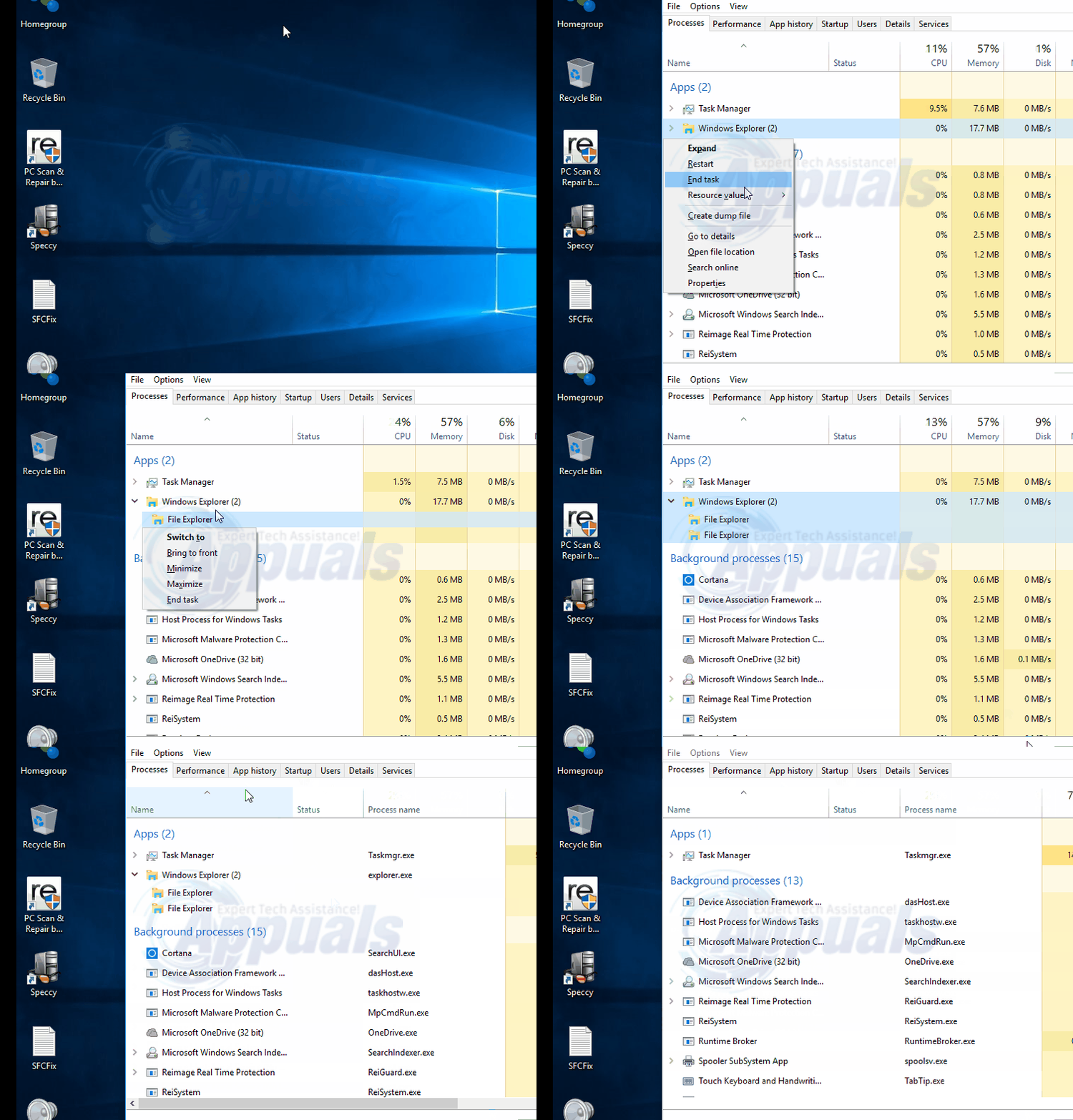
Method 2: Restart the explorer.exe process from the Task Manager
Hold the Windows Key and Press X. Choose Command Prompt (Administrator)
Type the following into the elevated Command Prompt and press Enter:
taskkill /f /im explorer.exe
NOTE: Don’t close the Command Prompt window unless you’ve executed the second command below.
Once the previous command has been executed, type the following into the elevated Command Prompt and press Enter:
start explorer.exe

Method 3: Stop the explorer.exe process from the Taskbar and then restart it
Last, but certainly not the least, a Windows 10 user can also restart the explorer.exe process by stopping it from the Taskbar and then starting it from the Task Manager. To do so, you need to first stop the explorer.exe process from the Taskbar:
Press and hold Ctrl + Shift, and right-click on the Taskbar.
Release the Ctrl and Shift keys, and click on Exit Explorer in the contextual menu.
And then start it from the Task Manager:
Launch the Task Manager by pressing Ctrl + SHIFT + Esc or Hold the Windows Key and Press X and Choose Task Manager.
Click on File in the toolbar at the top of the Task Manager
Click on Run new task in the contextual menu.
Type explorer.exe into the Open field and click on OK.
Exit the Task Manager.

Hello Kevin,
I’m glad to find your article on my phone, since my laptop started up and appeared to do a Microsoft update. Then it went to a black screen with a small window open on the upper left side, blank but labeled personalized settings. Nothing loaded and I had a heck of hard time trying to get anything open. I’m still not sure how I got the task manager opened. Your suggestions to start explorer didn’t work for me but I finally found restore. I’m still waiting to see if it will restore my computer, but it looks like a horrible Microsoft update to cause a disaster for me. How does that happen??