Fix: Corrupt Files Reported by SFC Using SFCFix

The corruption of system files that are necessary for the optimum functioning of their computers is one of the largest and most common problems that users of the Windows Operating System are often met with. Thankfully for Windows users, all versions of the Windows OS come with a highly effective utility capable of repairing corrupted system files – the System File Checker (SFC) scan.

By opening an elevated Command Prompt, typing in sfc /scannow and pressing Enter, you can initiate an SFC scan. The scan analyzes all of your computer’s system files, sets all corrupted/missing system files aside and then attempts to fix the issue by replacing them with uncorrupted cached copies. The SFC scan is, in every sense of the word, ingenious. However, there are some instances where the SFC scan simply isn’t enough to resolve the issue. For example, if the cached copies of the system files that have become corrupt are also, for some reason, corrupt, the SFC scan will not be able to fix them and will display a message along the lines of “Windows Resource Protection found corrupt files but was unable to fix some of them.”

Because such instances are extremely rare, most people wouldn’t know what they should do next when running an SFC scan does not entirely fix the problem. Enter SFCFix – a completely free piece of software that can be downloaded here and is designed specifically to tackle problems that an SFC scan failed to fix. SFCFix is extremely easy to use, portable and compatible with all recent versions of the Windows OS.

The way SFCFix works is pretty impressive to say the least. When you initiate an SFC scan, the scan creates a CBS.log file that contains information on every single corrupt or missing system file that the scan encounters, including those that the scan failed to repair or replace. What SFCFix does is that it parses and reads this CBS.log file, finds out what corrupt or missing system files the SFC scan couldn’t deal with and it needs to tend to, and then uses file hashes and advanced algorithmic searches to repair or replace any and all corrupt/missing system files.

Listed below are all of the steps you need to perform in order to resolve all of the problems that an SFC scan couldn’t fix for you. It should be noted that since SFCFix needs the CBS.log file that an SFC scan creates when it is initiated to do its thing, you will have to first run an SFC scan before you can launch SFCFix.

Open the Start Menu. Search for cmd. Right-click on Command Prompt in the search results. Click on Run as administrator in the contextual menu.
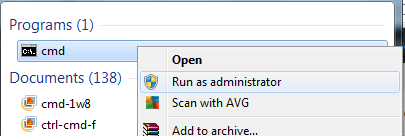
cmd-run-as-administrator

Type sfc /scannow into the elevated Command Prompt and press Enter.
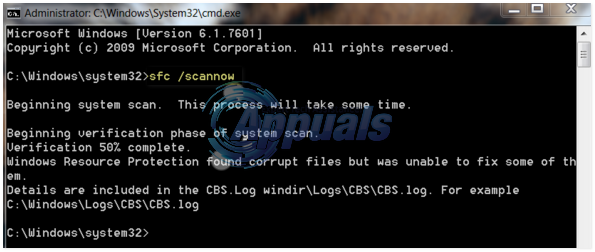
2016-01-20_045557

Allow the SFC scan to run its course, and as soon as it has, launch SFCFix. Press Enter on the prompts you get to continue.

Allow SFCFix to do its thing. SFCFix will scan your computer and then attempt to repair or replace the missing/corrupt system files that the SFC scan failed to deal with. The whole process can take anywhere between 15 and 30 minutes (depending on various factors), but SFCFix will inform you if the estimated time of completion for the process is longer than 15 minutes so that you know just how long you need to wait.
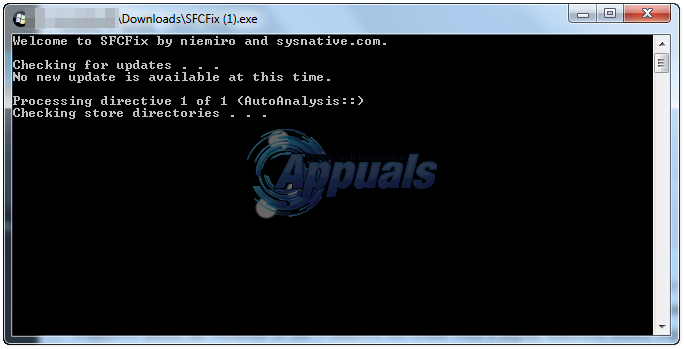
2016-01-20_050009

Once SFCFix has gone about its business successfully, it will open a Notepad document that will list the full path of every corrupt/missing system file that SFCFix found and whether or not it was successfully repaired or replaced by the program.

ABOUT THE AUTHOR

Kevin Arrows


Kevin Arrows is a highly experienced and knowledgeable technology specialist with over a decade of industry experience. He holds a Microsoft Certified Technology Specialist (MCTS) certification and has a deep passion for staying up-to-date on the latest tech developments. Kevin has written extensively on a wide range of tech-related topics, showcasing his expertise and knowledge in areas such as software development, cybersecurity, and cloud computing. His contributions to the tech field have been widely recognized and respected by his peers, and he is highly regarded for his ability to explain complex technical concepts in a clear and concise manner.

Comments

20
    SM
    Spyros Markou Feb 22, 2016

    I have error code 0xc000021a and I have tried all the methods you’ve mentioned, except for downloading SFCFix tool as my computer won’t start in order to get it online… What else can I do?

      KA
      K. Arrows Author Feb 23, 2016

      Are you able to login to Windows in anyway?

        SM
        Spyros Markou Feb 23, 2016

        I wasn’t able at all. Windows continued trying to load without success. I tried SFC scan but the response was that this action could not be performed. Finally, I did a full format. It appears that I have also issues on my laptop’s hard disk. After installing windows again, got a warning that my hard disk has a problem and I should make a backup on my files.

          KA
          K. Arrows Author Feb 23, 2016

          What was the exact message regarding hard disk?

          SM
          Spyros Markou Feb 23, 2016

          Well… I don’t remember exactly the message because I turned it off as it was coming continuously every 2′. It was saying that I have a problem with my hard disk and I should backup all my importand files. I had this message before with windows 10 and I got this message again when I installed windows 7 instead! It was a little bit strange though, as I run a scan on the hard drive for bad sector but didn’t show any errors

          SM
          Spyros Markou Feb 23, 2016

          I don’t remember the message as I switched it off because it was appearing every 5 minutes, but I run a System Diagnostic Report and I got this message regarding my hard disk along with other minor issues

          Diagnostic Results

          Warnings

          Error

          Symptom: The PredictFailure flag is set on the disk

          Cause: A logical disk has the SMART Predict Failure bit set.

          Details: This disk is experiencing a problem and predicts that the drive will fail.

          Resolution: 1. Back up any critical data on this drive.

          2. After backing up your data you can attempt to run chkdsk /f to repair minor errors. Do not run chkdsk /f on the drive unless the data has been backed up. Data loss may occur if the drive is experiencing physical failure.

          Related: Disk Diagnosis

          ——————————————————————————–

          Symptom: Pred Fail

          Cause: A device has reported a “Not OK” status.

          Details: The device, Disk drive, is reporting a bad status value. This device will not be available until the issue is resolved. The Plug and Play ID for this device is \.PHYSICALDRIVE0.

          Resolution: 1. Verify the correct driver is installed.

          2. Try updating the drivers using Windows Update.

          3. Check with the manufacturer for an updated driver.

          4. Attempt to uninstall and then reinstall the device using Device Manager.

          Related: Explanation of Error Codes Generated by Device Manager

          Manage Devices in Windows

          SM
          Spyros Markou Feb 23, 2016

          This is what I get from the ‘System Diagnostic Report’ about my hard drive:

          System Diagnostics Report

          Computer: SPYROS-PC

          Collected: Tuesday, February 23, 2016 5:55:06 PM

          Duration: 60 Seconds

          Diagnostic Results

          Warnings

          Error

          Symptom: The PredictFailure flag is set on the disk

          Cause: A logical disk has the SMART Predict Failure bit set.

          Details: This disk is experiencing a problem and predicts that the drive will fail.

          Resolution: 1. Back up any critical data on this drive.

          2. After backing up your data you can attempt to run chkdsk /f to repair minor errors. Do not run chkdsk /f on the drive unless the data has been backed up. Data loss may occur if the drive is experiencing physical failure.

          Related: Disk Diagnosis

          Symptom: Pred Fail

          Cause: A device has reported a “Not OK” status.

          Details: The device, Disk drive, is reporting a bad status value. This device will not be available until the issue is resolved. The Plug and Play ID for this device is \.PHYSICALDRIVE0.

          Resolution: 1. Verify the correct driver is installed.

          2. Try updating the drivers using Windows Update.

          3. Check with the manufacturer for an updated driver.

          4. Attempt to uninstall and then reinstall the device using Device Manager.

          Related: Explanation of Error Codes Generated by Device Manager

          Manage Devices in Windows

          And this is the results from ‘SFCFix Tool’:

          SFCFix version 2.4.9.2 by niemiro.

          Start time: 2016-02-23 18:13:17.467

          Microsoft Windows 7 – x86

          Not using a script file.

          AutoAnalysis::

          SUMMARY: No corruptions were detected.

          AutoAnalysis:: directive completed successfully.

          Successfully processed all directives.

          SFCFix version 2.4.9.2 by niemiro has completed.

          Currently storing 0 datablocks.

          Finish time: 2016-02-23 18:14:29.952

          ———————-EOF———————–

          I’m thinking of replacing my hard drive with a new SSD one

          KA
          K. Arrows Author Feb 24, 2016

          Your hard disk is failing, best to move data if possible and replace it.

    TT
    Tracey Thompson Apr 22, 2016

    I have run the scan after 100%of verification I got the message that Window Resource Protection did not find any integrity violation. What is my next step?

      KA
      K. Arrows Author Apr 23, 2016

      Your system files are ok, which error lead you to this page?

        MO
        Morena Mar 31, 2021

        Monitor lagging

    HE
    Helen Apr 29, 2016

    I had the same result as tracey I have error code 0x85002012 and keep coming up in outlook

      KA
      K. Arrows Author Apr 29, 2016
    AU
    András Udvardi May 23, 2016

    I followed you’ve wrote above and the result equipped.

    RA
    RayDeeOhMan Jun 15, 2016

    I ran sfc /scannow and got the following message: Windows Resource Protection found corrupt files but was unable to fix some of them. Details are included in the CBS.Log windirLogsCBSCBS.log.

    I then downloaded and ran SFCFix and it said Due to the nature of your corruptions, scan times have been extended by approximately 15-20 minutes.” Then it ran DISM and gave err msg 0x800f081f The Source files could not be found. Use the “Source” option to specify the location of the files that are required to restore the feature. I remember running DISM some weeks back in an attempt to fix my corrupt files, but I always got the same error message re not finding the source files. Any advice?

        RA
        RayDeeOhMan Jun 18, 2016

        Ok, I downloaded the ISO file – Win10_1511_2_English_x64.iso – but am having trouble mounting it. I followed the instructions to mount it given at http://appuals.com/how-to-mount-an-iso-file/ but they do not work for me. It says to right click on my ISO file and select Mount from the pop up menu, but Mount is not given as an option. I am logged onto my machine as an administrator, so not sure why that is. Another way to mount it is to use Windows PowerShell. I launched PowerShell as an administrator and carefully entered the command and path but that gives me an error message: “PS C:Windowssystem32> Mount-DiskImage -ImagePathg “D:UserskiyoshoeDocumentsTechnologyWindows 10 IS
        >>> OWin10_1511_2_English_x64.iso”

        Mount-DiskImage : A parameter cannot be found that matches parameter name ‘ImagePathg’.
        At line:1 char:17
        + Mount-DiskImage -ImagePathg “D:UserskiyoshoeDocumentsTechnologyW …
        + ~~~~~~~~~~~
        + CategoryInfo : InvalidArgument: (:) [Mount-DiskImage], ParameterBindingException
        + FullyQualifiedErrorId : NamedParameterNotFound,Mount-DiskImage”
        I have tried it several times in different ways and am not getting anywhere. Any advice?

          KA
          K. Arrows Author Jun 21, 2016

          You can use PowerISO to mount easily. Try it and let me know.

        RA
        RayDeeOhMan Jun 18, 2016

        Ok, I downloaded the ISO file – Win10_1511_2_English_x64.iso – but am having trouble mounting it. I followed the instructions to mount it given at http://appuals.com/how-to-moun… but they do not work for me. It says to right click on my ISO file and select Mount from the pop up menu, but Mount is not given as an option. I am logged onto my machine as an administrator, so not sure why that is. Another way to mount it is to use Windows PowerShell. I launched PowerShell as an administrator and carefully entered the command and path but that gives me an error message: “PS C:Windowssystem32> Mount-DiskImage -ImagePathg “D:UserskiyoshoeDocumentsTechnologyWindows 10 IS
        >>> OWin10_1511_2_English_x64.iso”

        Mount-DiskImage : A parameter cannot be found that matches parameter name ‘ImagePathg’.
        At line:1 char:17
        + Mount-DiskImage -ImagePathg “D:UserskiyoshoeDocumentsTechnologyW …
        + ~~~~~~~~~~~
        + CategoryInfo : InvalidArgument: (:) [Mount-DiskImage], ParameterBindingException
        + FullyQualifiedErrorId : NamedParameterNotFound,Mount-DiskImage”
        I have tried it several times in different ways and am not getting anywhere. Any advice?

        Reply